Beans Beyond the Bar: Building a Retail Coffee Business Inside Your Café
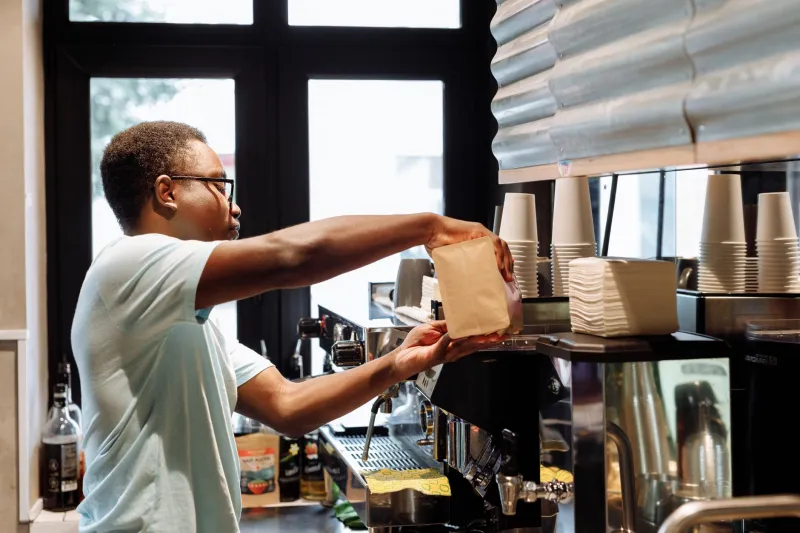
There's a conversation that happens in thousands of British cafés every week. A customer finishes their flat white, looks up with that slightly dazed expression of genuine satisfaction, and asks: "Where do you get your coffee from?" Most café owners answer the question politely and move on. A growing number are starting to see it as a commercial opportunity they've been ignoring.
Selling your house blend — whether in retail bags to walk-in customers or in wholesale volumes to local offices, delis, and restaurants — sits alongside your existing operation like a quiet business waiting to be switched on. But quiet doesn't mean simple, and enthusiasm for the idea shouldn't outpace a clear-eyed look at whether the numbers actually work for your specific situation.
What "Selling Beans" Actually Means in Practice
Before anything else, it's worth being precise about what you're considering. There are broadly two routes:
Retail bagging means selling pre-packaged coffee directly to customers in your café, possibly through your website or at local markets. Margins can be attractive, but you're competing with established roasters who already have brand recognition, distribution networks, and marketing budgets.
Local wholesale means supplying other businesses — offices, small shops, hospitality venues — with regular bean orders. The margins per unit are slimmer, but the volumes and repeat-purchase nature of the relationship can make it a reliable income layer.
Many cafés dip into both. The question is whether either is worth the operational complexity at your current stage of growth.
The Roasting Question Changes Everything
If you're sourcing your beans from a third-party roaster — which is the case for the vast majority of UK independent cafés — you need to understand what your supplier agreement actually allows. Most roasters supply on the understanding that you're serving the coffee, not reselling it. Some will actively support retail and wholesale ambitions; others won't. Have that conversation early, because building a product around beans you can't legally resell under your own branding is a problem you don't want to discover six months in.
If you're considering investing in your own roasting setup, that's a fundamentally different business decision. Entry-level commercial roasters start around £3,000 to £5,000, and that figure doesn't include the learning curve, green bean sourcing relationships, or the additional space and ventilation requirements. Roasting is a genuine craft — and doing it badly will damage your café's reputation faster than not doing it at all.
Packaging, Labelling, and the Regulatory Bit
Selling pre-packaged food products in the UK comes with labelling requirements that catch many café owners off guard. The Food Information for Consumers Regulations require you to include the product name, weight, allergen information (coffee itself isn't a listed allergen, but cross-contamination declarations matter), and your business details as the seller. If you're selling online, there are additional requirements around distance selling.
This isn't a reason to avoid the venture — it's a reason to sort the paperwork properly before you start. Custom-printed bags look professional and reinforce your brand, but they represent an upfront cost. A minimum order of 500 branded bags from a UK supplier typically runs between £200 and £400 depending on specification. That's not ruinous, but it is real money that needs to earn its keep.
When the Maths Actually Works
Let's be direct about margins. If you're buying roasted beans at £12 to £16 per kilo from your roaster and selling 250g retail bags at £8 to £10 each, your gross margin per bag — before packaging, labelling, and the time cost of bagging and selling — is modest. The numbers improve at scale and improve further if you have your own roasting operation, but for a small independent café doing this as a side activity, the revenue contribution is unlikely to transform your P&L.
Where it does make genuine commercial sense:
- You already have a loyal following who actively ask where to buy your beans. Conversion is built in.
- Your café has footfall but limited seating revenue — retail products extend revenue per square foot without adding covers.
- You're in a location with strong gifting potential — tourist areas, markets, corporate districts — where coffee makes a natural purchase.
- You have a local wholesale opportunity with a reliable anchor customer (an office block, a hotel, a deli) who can take consistent volume.
Without at least one of these conditions, bean retail tends to become a distraction that occupies mental bandwidth without delivering proportionate return.
Starting Small and Testing the Idea
The lowest-risk entry point is simply asking your roaster whether they offer a white-label or retail bag service. Several UK specialty roasters will supply pre-packaged bags with your branding for a minimum order, removing the bagging logistics entirely. You're sacrificing margin but dramatically reducing complexity — which, when you're also running a café, has real value.
Put a small display near the till. Price it clearly. Track sales for three months. If customers are buying consistently, you have evidence to justify going deeper. If bags are sitting there gathering dust, you've learned something important without a significant financial commitment.
The Honest Verdict
Selling beans can absolutely work as a revenue layer for the right café in the right circumstances. But it works best when it grows organically from genuine customer demand rather than being imposed as a strategic pivot. Your coffee is already doing the marketing every time someone drinks it in your café. The question is whether your specific customer base, location, and operational capacity make the next step worthwhile.
If you're fielding that "where do you get your beans from?" question several times a day, that's a meaningful signal. If you're asking yourself whether you should be getting that question, that's a different conversation — and probably one worth having about your core product before you start thinking about retail.
 Photo: Tour de France, via todaycycling.com