Beating the Afternoon Dead Zone: How Independent Cafés Are Turning 2pm–5pm Into a Second Peak

Ask almost any café owner in Britain what happens between two and five in the afternoon, and you'll get the same resigned shrug. The morning rush has long since faded. The lunch crowd has settled back at their desks. The place feels half-empty, the till goes quiet, and the team spend more time wiping surfaces than serving customers.
For most operators, this is just the rhythm of the trade. Accepted. Inevitable. Built into the forecasts.
Except it isn't inevitable. Not anymore.
A growing cohort of independent café owners across the UK — from converted railway arches in Manchester to terraced shopfronts in Brighton — are engineering deliberate strategies to fill that dead window. And some of them are reporting mid-afternoon revenue that rivals their morning peak. Here's how they're doing it.
Why the Lull Exists (and Why That's Actually Good News)
Understanding the problem is the first step to solving it. The 2pm–5pm gap exists for structural reasons: most employed people are at their desks, school runs haven't started, and the social rituals around coffee tend to cluster at morning and early evening. That's not going to change.
But here's the thing — the people who aren't tied to a desk during those hours are an underserved market. Remote workers, freelancers, students, parents with a rare hour to themselves, retirees who avoid the morning rush. These groups are out there, looking for somewhere comfortable to land. The question is whether your café is set up to attract and retain them.
Making Your Space Work Harder
One of the most effective — and lowest-cost — interventions is simply designing your afternoon atmosphere with intention. Several UK independents have started creating what they call a "work-mode" environment from around 1:30pm: slightly reduced background music, power sockets made more prominent, free and fast Wi-Fi clearly signposted, and tables arranged to feel less like a café and more like a productive co-working space.
This isn't about becoming a WeWork with an espresso machine. It's about signalling to the laptop crowd that they're genuinely welcome, not just tolerated. A small chalk sign outside reading "Good Wi-Fi. Good coffee. Great afternoon." costs nothing and speaks directly to the right audience.
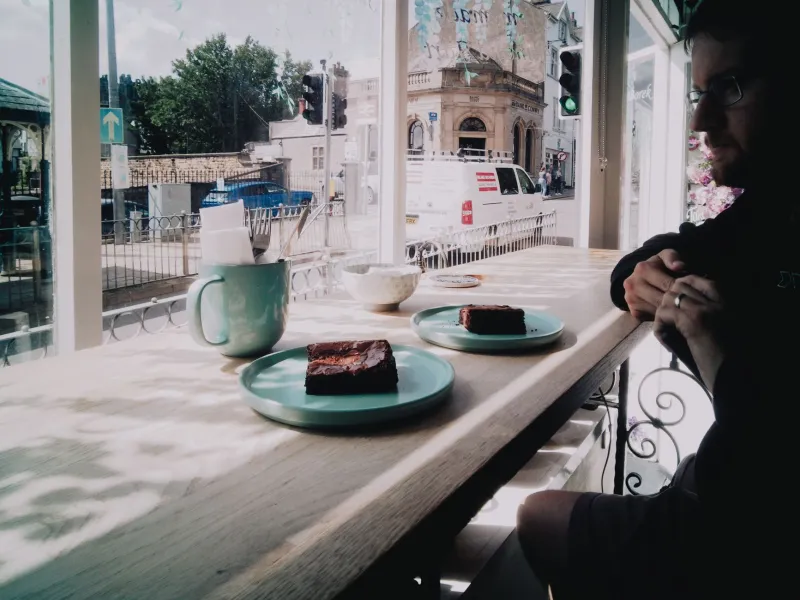
Some operators go further, offering a simple afternoon "work package" — filter coffee or a pot of tea with a slice of cake — for a flat price that feels like good value for someone planning to stay for two hours. It drives spend, encourages dwell time, and turns occasional visitors into reliable afternoon regulars.
Reinventing Afternoon Tea Without the Fuss
The traditional British afternoon tea has had something of a cultural moment in recent years, and smart café owners are capitalising on it without needing a hotel budget. You don't need tiered cake stands and finger sandwiches to make this work — though if that's your thing, brilliant.
What you do need is a clearly communicated offering that gives people a reason to visit specifically in the afternoon. A rotating selection of two or three homemade bakes paired with quality loose-leaf tea or a specialty filter option, served as a deliberate experience rather than an afterthought, can generate real word-of-mouth. Position it as a limited-availability treat — "available from 2pm while stocks last" — and you create gentle urgency that encourages earlier visits.
Several independent operators have found that promoting this kind of afternoon ritual on social media, particularly mid-morning when people are already thinking about their day, drives a noticeable uptick in 2pm–4pm footfall.
Office Delivery Runs: The Overlooked Revenue Stream
This one requires a bit more operational planning, but the payoff can be substantial. Many British town and city centres have clusters of offices, studios, and small businesses within walking or cycling distance of independent cafés — and those workplaces are full of people who'd love a decent coffee in the afternoon but can't justify leaving their desks.
A handful of café owners have built simple afternoon delivery runs: a set window, a limited menu, and a WhatsApp group or basic online order form for nearby businesses. No third-party apps, no commission fees, no complex logistics. Just a barista with a well-insulated bag and a bike, covering a half-mile radius.
The margins on this kind of direct delivery are significantly better than anything you'd see through a platform like Deliveroo or Uber Eats, and the relationships built with local businesses often translate into catering orders, event bookings, and office loyalty schemes.
Curated Events and Soft Programming
Another tactic that's gaining traction is light-touch afternoon programming — nothing that requires a full production budget, just a reason for people to show up. A weekly afternoon book club. A fortnightly "learn to brew" session for a small group. A quiet creative hour where local artists or writers gather by informal arrangement.
None of these need to be formally ticketed or heavily promoted. They work best when they feel organic, community-led, and consistent. The café becomes associated with a particular kind of afternoon experience, and that association builds over time into a genuine draw.
The Mindset Shift That Makes It Possible
Perhaps the biggest barrier to cracking the afternoon lull isn't tactical — it's psychological. Many café owners have simply accepted the quiet as unavoidable and stopped looking for solutions. The operators who are succeeding in this window have made a deliberate decision to treat it as a business development challenge rather than a structural given.
That shift in thinking — from passive acceptance to active engineering — is ultimately what separates the cafés turning a profit at 3:30pm from those waiting for the day to end.
The afternoon doesn't have to be dead time. With the right approach, it can be some of the most valuable hours in your trading week.