The Untapped Goldmine Right Outside Your Door
Whilst Costa and Starbucks fight over prime high street locations, smart independent café owners are discovering something far more valuable: becoming genuinely indispensable to their local community. It's not about serving better coffee (though that helps) — it's about understanding that people don't just need caffeine, they need connection.
The concept of the 'third place' — that crucial space between home and work where real community happens — isn't just sociology textbook theory. It's a proven business model that can transform your café from a struggling independent into the kind of place people can't imagine their neighbourhood without.
Why Your Regulars Aren't Enough
Most café owners think success means having a loyal customer base who pop in for their morning flat white. But here's the uncomfortable truth: those customers are portable. If a new coffee shop opens closer to their commute, or if their workplace installs a fancy coffee machine, you've lost them.
Community anchors, however, are different. When your café becomes the place where the local book club meets, where freelancers know they'll find their tribe, where parents gather after school drop-off — you've created something that can't be replicated by opening another branch down the road.
The Revenue Reality of Community Building
Let's talk numbers, because community building isn't just feel-good marketing — it's serious business strategy. When customers see your café as their local hub rather than just another coffee option, several profitable things happen:
Increased dwell time translates directly to higher spend per visit. The difference between a grab-and-go customer spending £3 and a community member settling in for two hours with multiple drinks and food is substantial.
Word-of-mouth becomes supercharged when people feel ownership of 'their' café. They don't just recommend you — they actively defend you against competitors and bring friends to share 'their' discovery.
Predictable revenue streams emerge through regular community events, private bookings, and the kind of customer loyalty that weathers economic storms.
Creating Your Community Magnet
Transforming your café into a community hub requires intentional design and programming, not just hoping people will linger. Here's how to architect genuine local connection:
Design for Connection, Not Just Efficiency
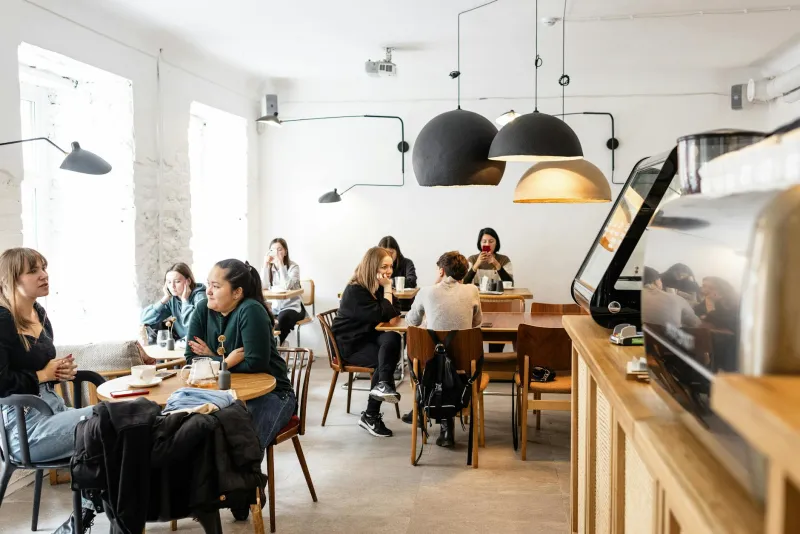
Your layout should encourage interaction whilst respecting different needs. Create distinct zones: communal tables for co-working and chance encounters, cosy corners for intimate conversations, and flexible spaces that can accommodate evening events.
Invest in proper seating — not just the cheapest chairs you can find. Comfortable furniture sends the message that you want people to stay. Consider power outlets, good lighting, and acoustics that allow conversation without forcing everyone to shout.
Become the Local Events Calendar
Don't wait for community groups to find you — actively court them. Reach out to local book clubs, photography groups, new parent networks, and freelancer meetups. Offer your space during quieter hours in exchange for guaranteed minimum spends.
Host your own regular events: quiz nights, acoustic sessions, art exhibitions featuring local artists. The key is consistency — people need to know that every second Tuesday means poetry night at your café.
Partner Like Your Business Depends on It
Because it does. Form genuine partnerships with local businesses, schools, and charities. Sponsor the local football team's kit in exchange for post-match gatherings. Partner with the nearby gym to offer post-workout smoothies. Collaborate with local schools for fundraising events.
These partnerships create a web of mutual recommendation that no marketing budget can replicate.
The Practical Profit Path
Community building isn't charity work — it's strategic investment. Start by identifying your neighbourhood's existing social patterns. Where do parents congregate after school? What local groups are currently meeting in less-than-ideal spaces? Which community needs aren't being met?
Then design programming around these gaps. If there's nowhere for local entrepreneurs to network, start a monthly breakfast meetup. If parents are desperate for somewhere to socialise whilst children play safely, create a family-friendly morning session.
Track the commercial impact religiously. Monitor how community events affect daily revenue, measure customer retention rates, and calculate the lifetime value of community members versus transactional customers.
Beyond the Coffee Cup
The most successful community cafés understand they're not really in the coffee business — they're in the human connection business. Coffee just happens to be the excuse people use to gather.
This mindset shift changes everything: your product mix, your staffing approach, your opening hours, even your supplier relationships. When you're building community, every decision should be filtered through the question: "Does this strengthen or weaken our role as the neighbourhood's living room?"
Your Competitive Moat
Here's the beautiful truth about becoming a genuine community hub: it's the one competitive advantage that chains simply cannot replicate. They can copy your menu, undercut your prices, even hire your staff. But they cannot manufacture the authentic local relationships that make you irreplaceable.
Whilst they're optimising for efficiency and standardisation, you're optimising for connection and belonging. That's not just a different business model — it's a different world entirely.
The question isn't whether your local community needs a third place. The question is whether you're brave enough to become it.