Laptops Welcome — But Are They Actually Good for Business? The Truth About Designing for Remote Workers
The Laptop Question Every Café Owner Is Quietly Asking
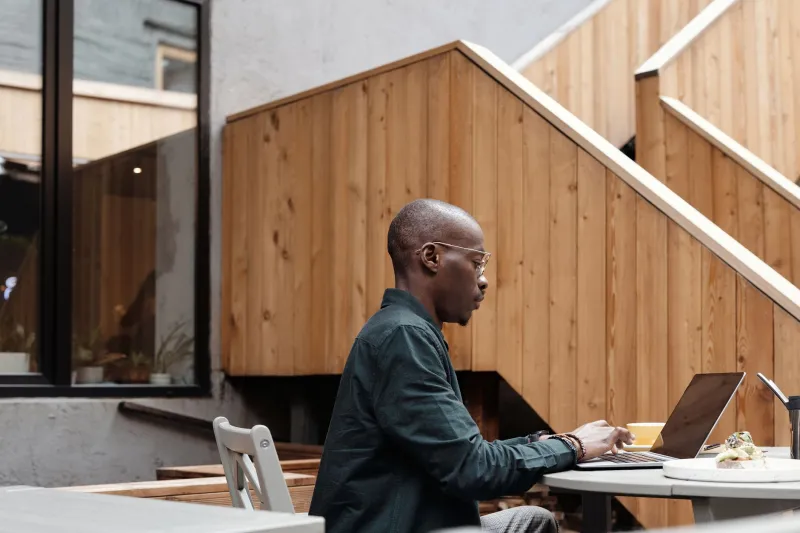
You've seen them. The person who arrives at 9am with a MacBook, orders a flat white, plugs in near the window, and doesn't move until half two. Sometimes they order a second drink. Sometimes they don't. Sometimes they leave a tip. Often they don't.
The laptop crowd has become one of the most polarising topics in UK café culture — and yet most independent owners are making decisions about them based on gut feeling rather than any real understanding of the numbers. The truth is, remote workers can be brilliant or brutal for your bottom line, and the deciding factor is often something you've probably never thought to examine: your layout.
What Remote Workers Actually Want (And What They'll Pay For)
Let's be honest about who we're talking about. The remote worker demographic in UK cafés skews towards people in their late twenties to mid-forties, often in professional or creative roles, with disposable income and strong brand loyalty. When they find a spot they like, they come back. Repeatedly. And they tell their colleagues.
But they're also deeply pragmatic. They need:
- A power outlet within reach, or at least nearby
- Reasonable Wi-Fi that doesn't drop during a video call
- Enough table space for a laptop and a drink without feeling like they're performing a juggling act
- Background noise at a level that's stimulating but not distracting — what researchers sometimes call 'productive ambient sound'
- A sense that they're not being silently judged for staying more than an hour
When those conditions are met, remote workers become something genuinely valuable: a reliable revenue baseline during the slow parts of the day. That Tuesday 10am lull that usually costs you money? A few loyal laptop regulars can smooth it right out.
The Sightline Problem Nobody Talks About
Here's where layout becomes critical. Most UK café interiors were designed — if they were designed deliberately at all — with traditional dine-and-go customers in mind. That means tables close together, chairs that prioritise looking good over sitting comfortably for three hours, and window seats treated as premium spots for couples rather than functional workspaces.
Remote workers are acutely sensitive to sightlines. They want to see the door (it feels safer, less claustrophobic), they don't want to feel overlooked by staff or other customers, and they often prefer a wall at their back rather than open space behind them. This is partly psychological — it mirrors the 'refuge' instinct that good interior designers have understood for decades — and partly practical. Nobody wants to share a screen accidentally with a stranger.
If your layout forces laptop users into the middle of the room, facing other customers, with their screens visible to passers-by, they'll feel exposed. They'll leave sooner. They might not come back.
Power Outlets: The Most Underrated Asset in Your Café
Few things reveal the remote-worker-friendliness of a café faster than its power situation. A single plug socket near the counter, shared between the card reader and a phone charger, is a signal. It says: we didn't really think about you.
Conversely, a café that has thoughtfully installed USB-A and USB-C sockets at table level — or even just positioned wall sockets so that a few key tables have easy access — is sending a very different message. It says: we get it. Stay a while.
The investment here is modest. An electrician, some surface-mounted conduit, a handful of sockets. Compared to the lifetime value of a loyal remote worker who visits three times a week and spends £7–£12 each time, it's not even a close calculation.
Table Clustering and the Density Trap
This is where things get genuinely complicated. Packing tables tightly maximises theoretical covers — but remote workers need more space than a standard diner. A laptop user with a bag, a notebook, and a coffee is already overflowing from a standard 60cm café table. Put another customer 40cm to their left and everyone's uncomfortable.
The temptation is to see this as a problem: the laptop person is 'wasting' a table that could seat two. But this framing misses the bigger picture. If that laptop person is spending £9 and staying for two hours, during a period when you'd otherwise have an empty table, they're not costing you anything. They're filling a gap.
The smarter approach is zoning. Designate a section of your café — ideally along one wall, with access to power — as a 'working-friendly' zone. Use slightly larger tables, space them a bit more generously, and allow that zone to operate at lower density. Keep your central and window-facing tables for groups and quicker-turnover customers. This way you're not sacrificing covers across the board — you're matching your layout to different customer behaviours simultaneously.
The Vibe Is a Business Decision
There's a subtler dimension to all of this that's easy to overlook. Remote workers are partly paying for an atmosphere. The café that gets this right — warm lighting, good acoustics, a sense of calm purpose — creates something that a home office or a corporate co-working space genuinely can't replicate. That's your competitive advantage.
But that atmosphere is fragile. It can be broken by a layout that feels chaotic, by music that's too loud, by staff who hover anxiously over anyone who's been sitting for more than an hour. The physical environment and the human environment work together.
If you want to attract and retain the laptop crowd, the conversation has to include both. Your layout creates the conditions. Your team's attitude sustains them.
A Quick Audit for Your Own Space
Before you spend anything, walk through your café at 10am on a weekday and ask yourself:
- If I had a laptop and a deadline, where would I sit?
- Can I reach a power socket from that seat without trailing a cable across the floor?
- Can I see the door without turning around?
- Is the ambient noise level tolerable for concentration?
- Would I feel comfortable staying for two hours without being made to feel guilty?
If the honest answers aren't great, you've got your starting point. Small changes — repositioning a few tables, adding a socket, creating a subtle zoned area — can shift the dynamic significantly without a full refurbishment.
The laptop crowd isn't going away. In a post-pandemic UK where hybrid working is now simply how many people operate, the café-as-office is a permanent part of the landscape. The question isn't whether to cater for it. It's whether you're doing it well enough to earn the loyalty — and the revenue — that comes with it.