Before You Sign Anything: The Case for Testing Your Coffee Concept on the Road First
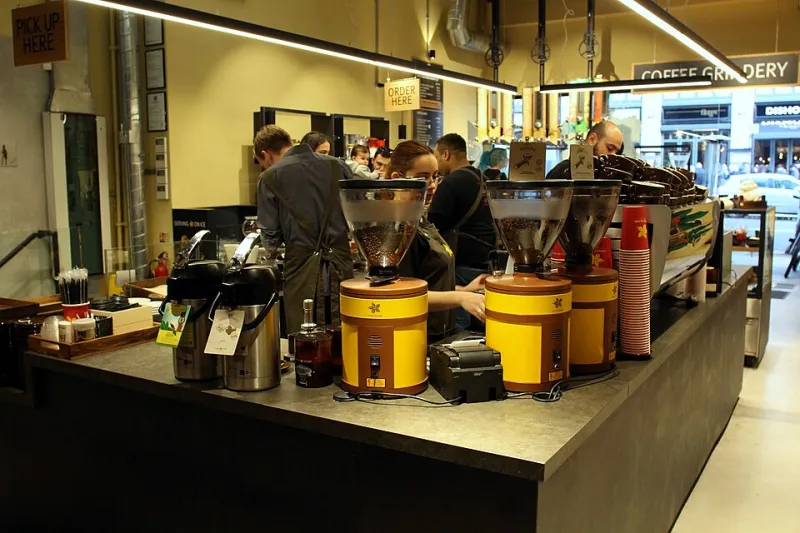
Photo: Bex Walton from London, England, CC BY 2.0, via Wikimedia Commons
The Lease Trap
Every year, thousands of people across the UK sign commercial leases for café premises on the strength of a business plan, a gut feeling, and a deep love of coffee. And every year, a significant proportion of them discover — too late, and too expensively — that the concept they imagined didn't quite match the reality of the location, the customer base, or the market.
A commercial lease is a serious financial commitment. Typically five to ten years, with personal guarantees, dilapidation clauses, and rent review mechanisms that can catch inexperienced operators badly off guard. Getting it wrong doesn't just mean a failed business. It can mean years of financial obligation to a premises you've already vacated.
There is a smarter way in. And it involves a market stall, a cargo bike, or a well-positioned festival pitch.
Why Pop-Up Trading Is a Strategic Tool, Not a Compromise
The pop-up coffee format has shed its scrappy, temporary image. What was once seen as a stepping stone for those who couldn't yet afford a proper shopfront is increasingly recognised by experienced hospitality entrepreneurs as a deliberate, sophisticated market-testing strategy.
The logic is simple. Before committing to permanent premises, you need answers to questions that no business plan can reliably provide:
- Does my target customer actually exist in sufficient numbers in this area?
- Will people pay my price point for my product?
- Can my concept translate from an idea into a consistent, scalable operation?
- Do I actually enjoy running this kind of business day-to-day?
A pop-up operation answers all of these questions with real data, real money, and real customers — at a fraction of the cost and risk of a permanent site.
The Formats Worth Considering
The UK pop-up coffee landscape offers more variety than most people realise.
Farmers' markets and food markets. These are the most accessible entry point. Pitches at established markets in towns and cities across Britain typically cost between £30 and £150 per day depending on location and footfall. You get access to a self-selecting audience of quality-conscious food and drink buyers — exactly the demographic that independent coffee concepts appeal to.
Festival and event pitches. From local village fetes to major music festivals, the demand for quality coffee at UK events is enormous and chronically undersupplied by the default offerings. Festival pitches require more upfront investment — pitch fees can run into thousands at larger events — but the volume potential is significant, and the brand exposure is invaluable.
Cargo bike or converted van routes. A branded cargo bike or compact coffee van operating a regular route — office districts on weekday mornings, residential areas on weekends — builds a loyal following quickly. The mobility means you can test different locations without commitment, following the customers rather than hoping they find you.
Corporate and office partnerships. Approaching local businesses to provide a regular pop-up coffee service — weekly, fortnightly, or for specific events — generates consistent, bookable revenue and introduces your brand to a professional audience with genuine spending power.
The Practical Groundwork: Licensing and Equipment
Before your first trading day, there are a few non-negotiable practicalities to sort.
Food business registration. You must register as a food business with your local council at least 28 days before trading. This is free, straightforward, and non-optional. Do it first.
Street trading licence or market pitch agreement. If you're trading on public land, you'll need a street trading licence from the relevant local authority. Market pitches come with their own agreements. Read the terms carefully — some markets have exclusivity clauses that prevent you trading elsewhere nearby.
Public liability insurance. Essential. Budget for at least £5 million cover. Policies designed for mobile food traders typically start around £150–200 per year and are widely available.
Equipment choices. This is where new operators often overspend. For early-stage pop-up trading, a quality semi-commercial espresso machine — a La Marzocco Linea Mini or a Fracino Bambino are popular choices among UK mobile operators — paired with a reliable grinder is sufficient. Resist the urge to invest in a full commercial setup before you've validated your concept. Battery-powered or generator-run setups give you location flexibility; water tank systems remove the dependency on mains supply.
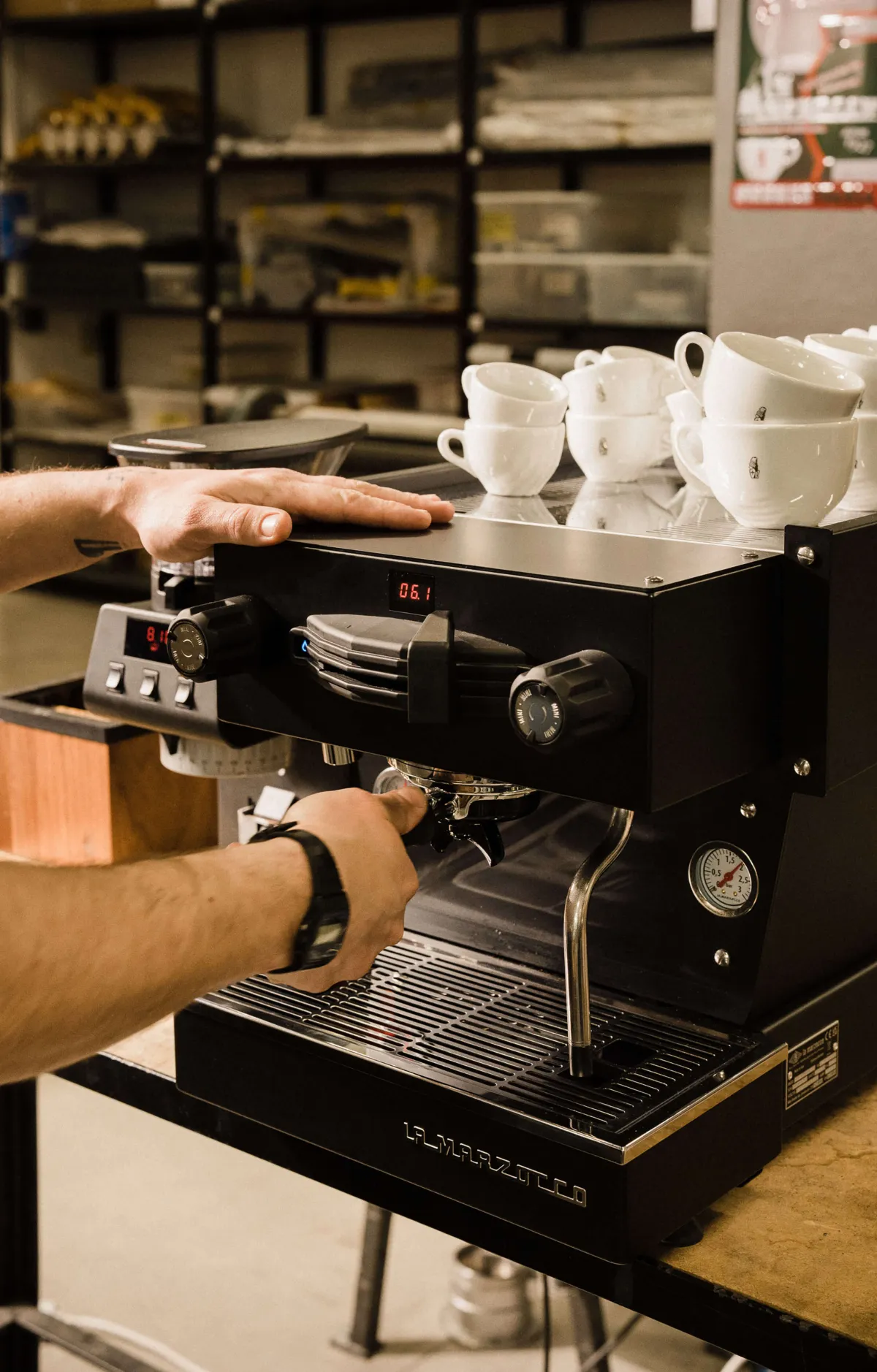 Photo: La Marzocco Linea Mini, via lamarzocco.com
Building an Audience That Follows You Indoors
Here's where the pop-up strategy becomes genuinely powerful for anyone planning a permanent site eventually.
Every customer who buys from your market stall or festival pitch is a potential founding customer of your future café. But only if you capture them.
Build an email list from day one. Offer a small incentive — a loyalty stamp card, a discount on their next visit — in exchange for an email address. Use Instagram actively, tagging locations and using local hashtags. Create a sense of narrative around your journey: people love following a story, and the pop-up-to-bricks-and-mortar arc is genuinely compelling.
When you do eventually open permanent premises, you want to walk in on day one with a warm audience already invested in your success. Some of the UK's most talked-about café openings in recent years have been built on exactly this foundation — a loyal following cultivated over months or years of pop-up trading, ready to queue on opening day and tell all their friends.
The Numbers That Make It Work
A well-run market pitch covering costs and generating a modest profit validates your pricing and your product simultaneously. If you can't make the numbers work at a busy farmers' market with low overheads and a captive audience, that's critical information before you take on a lease.
Conversely, if you're consistently selling out, turning people away, and fielding questions about when you're opening a proper place — that's the market research money can't buy.
The pop-up route isn't the slow road to a coffee business. It's the smart road. And in a market where permanent premises carry serious financial risk, smart is exactly what you want to be.