Shiny and Shelved: Why Expensive Equipment Keeps Gathering Dust in UK Cafés
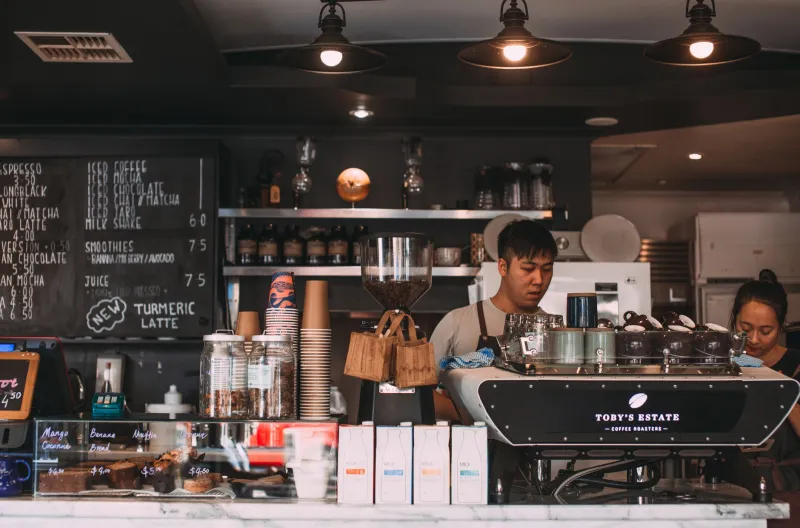
There's a particular kind of heartbreak that café owners rarely talk about. It happens about six months after a big equipment purchase — when the excitement has faded, the novelty has worn off, and that gleaming new piece of kit is sitting in the corner doing precisely nothing. Nobody warned you this was coming. And yet, it happens constantly.
Across independent cafés from Edinburgh to Exeter, there's a quiet graveyard of premium equipment that never quite lived up to its promise. Batch brewers used twice a week. Cold brew towers that got switched on in June and quietly forgotten by August. Nitrogen taps installed for the Instagram moment, then abandoned when the refill logistics turned into a headache. The investment was real. The return? Considerably less so.
So why does this keep happening — and more importantly, how do you stop it happening to you?
The Aspiration Gap
Most equipment purchases start with a feeling rather than a plan. An owner visits a trade show, sees a beautiful piece of machinery in action, and imagines how it would look in their space. Or they visit a competitor who's doing something clever, and feel the pull of not being left behind. These are entirely human responses. But feelings and business plans are very different things.
The aspiration gap is the distance between what you imagine the equipment will do for your business and what it actually does. It's wider than most owners expect, and bridging it requires work that happens before you sign anything.
Take the case of a small independent in Manchester that invested nearly £4,000 in a premium automatic milk steamer to speed up service during the morning rush. The logic seemed sound — faster drinks, more throughput, happier customers. What the owner hadn't accounted for was that their bottleneck wasn't the steaming. It was the single-group espresso machine they already had. The new steamer made no difference to output because the constraint was upstream. The machine sat largely idle within three months.
The Wrong Question
Here's the thing: most café owners ask "what equipment should I buy next?" when they should be asking "what problem am I actually trying to solve?"
These sound like similar questions. They're not.
The first question leads you to equipment catalogues, sales reps, and comparison reviews. The second leads you to your own data — your busiest periods, your slowest service points, your customer feedback, your staff frustrations. One starts with a product. The other starts with a diagnosis.
Before any equipment conversation, it's worth sitting down and mapping out exactly where your operation is losing time, money, or quality. Is service slow because of equipment, or because of workflow? Are customers leaving because you can't serve them fast enough, or because the queue puts them off before they even reach the counter? Is your coffee inconsistent because of the grinder, or because of variable staff technique?
Equipment can solve equipment problems. It can't solve training problems, workflow problems, or staffing problems — no matter how expensive it is.
The Hidden Costs That Don't Make the Brochure
Every piece of equipment carries costs beyond the purchase price, and these are the ones that tend to kill the business case quietly.
Training time is the big one. A new piece of kit doesn't become useful the moment it arrives — it becomes useful when your team is genuinely confident using it, which takes longer than you'd think. If your staff turnover is high (and in the current UK hospitality climate, it often is), you're essentially restarting that training process every few months.
Then there's the maintenance overhead. Premium equipment needs premium servicing. That might mean specialist engineers who charge accordingly, proprietary parts that take time to source, or simply the reality that when it breaks down — and it will — your backup plan is limited.
And don't underestimate the menu development cost. Adding a new piece of equipment often means adding new menu items to justify it, which means recipe development, staff briefing, reprinting menus, and updating your digital presence. None of that is free, and all of it takes owner time.
A Framework That Actually Helps
Before committing to any significant equipment purchase, run it through these four questions:
1. What specific metric will this improve? Not a vague sense of quality or customer experience — an actual measurable number. Average transaction value, drinks per hour, waste percentage. If you can't name the metric, the case for the purchase isn't ready yet.
2. Why isn't that metric improving without new equipment? If you can't answer this, there's a real chance the equipment isn't the solution. Spend a week genuinely observing your operation before making any decisions.
3. What does the realistic utilisation look like? Not the optimistic version — the realistic one. How many times per day will this actually be used? What does that mean for the return on your investment? A £3,000 machine used twice a week is a very different proposition to one used fifty times a day.
4. What's the contingency if it doesn't work? Can you return it? Is there a trial period? Could you rent before you buy? The best equipment suppliers are confident enough in their product to let you test it properly. If that option isn't on the table, ask yourself why.
When the Purchase Is Right
None of this is to say you shouldn't invest in your equipment. The right kit, at the right time, for the right reasons, can genuinely transform a café's performance. A better grinder really can improve consistency and reduce waste. A faster espresso machine really can change your peak-hour throughput. The key is that the investment follows the evidence, rather than leading it.
The cafés that make their equipment work are the ones that treat each purchase as a business decision rather than a lifestyle one. They've done the numbers. They've identified the problem. They've planned the training. And they've set a clear timeline for evaluating whether the investment has delivered.
That's not as exciting as browsing the trade show floor. But it's considerably more profitable.
If you're sitting on equipment that isn't pulling its weight, it might be time for an honest audit — not just of the kit, but of the thinking that led to buying it. Understanding that pattern is usually worth more than the next upgrade.