Values as Currency: Why Ethical Credentials Are Reshaping the British Coffee Market
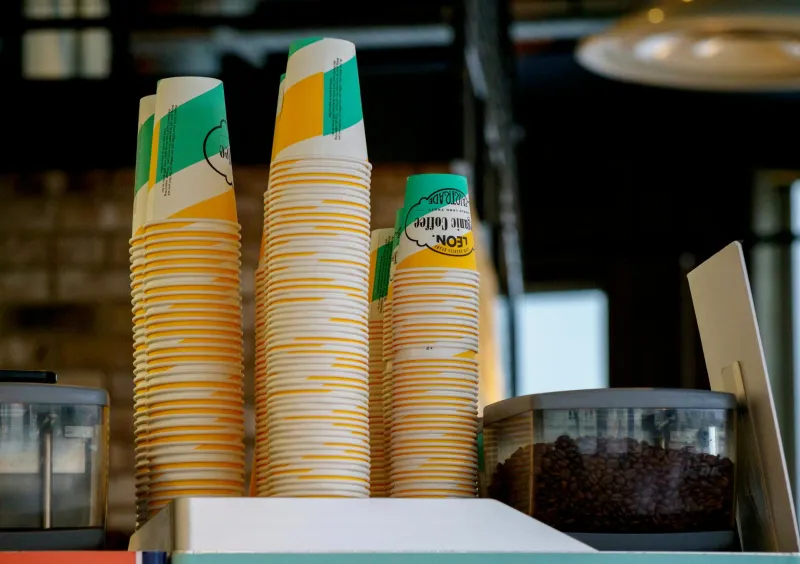
Something fundamental has shifted in the British high street. Walk through any town centre and you'll notice independent cafés proudly displaying an alphabet soup of ethical badges: Fairtrade, B Corp, Rainforest Alliance, Organic, Carbon Neutral. What was once the domain of earnest co-operatives has become mainstream commercial strategy.
But here's the question every savvy café owner should be asking: do these credentials actually translate into pounds and pence, or are they expensive virtue signalling?
The Numbers Don't Lie
Recent research from Mintel reveals that 73% of British consumers are willing to pay more for products from companies that demonstrate social responsibility. More tellingly, 42% actively seek out businesses that align with their personal values when choosing where to spend their money.
For coffee shops, this trend is particularly pronounced. The morning coffee purchase is often habitual and emotional rather than purely transactional. When customers feel good about where their money goes, they're more likely to become regulars and recommend your business to others.
Consider the trajectory of companies like Pret A Manger, which achieved B Corp certification in 2022. Whilst correlation isn't causation, their focus on ethical credentials has coincided with sustained growth in an increasingly competitive market.
The B Corp Phenomenon
B Corporation certification has emerged as the gold standard of ethical business credentials. Unlike traditional certifications that focus on single issues, B Corp status requires companies to meet rigorous standards across governance, workers, community, environment, and customers.
For café owners, the appeal is clear: B Corp certification signals comprehensive ethical commitment rather than selective green-washing. It's particularly powerful with younger consumers who've grown sceptical of corporate virtue signalling.
However, achieving B Corp status isn't trivial. The certification process typically takes 6-18 months, requires extensive documentation, and costs £500-2,500 annually depending on your turnover. You'll need to demonstrate measurable positive impact across multiple areas of your business.
Is it worth it? That depends on your customer base and growth ambitions. B Corps report average annual growth rates 28% higher than non-certified businesses, though establishing causation is complex.
The Fairtrade Foundation: Proven Track Record
Fairtrade remains the most recognised ethical certification among British consumers, with 78% awareness according to recent polling. For coffee businesses, it's often the most straightforward entry point into ethical positioning.
 Photo: Fairtrade Foundation, via assembliesforall.org.uk
The mathematics are compelling: Fairtrade coffee typically commands a 15-25% premium over conventional alternatives, whilst certification costs are relatively modest (£1,200-3,000 annually for most independent operators).
More importantly, Fairtrade certification provides clear storytelling opportunities. Customers understand what it means and can visualise the impact of their purchase. This emotional connection drives loyalty in ways that abstract sustainability metrics cannot.
Sarah, who runs a 50-seat café in Bath, switched to exclusively Fairtrade coffee 18 months ago. Despite raising prices by an average of 20p per cup, customer complaints were minimal, and her regular customer base actually increased by 15%. "People feel good about their daily coffee when they know it's making a difference," she explains.
The Organic Premium
Organic certification occupies an interesting position in the coffee market. Whilst health-conscious consumers actively seek it out, the premium can be substantial – often 30-50% above conventional alternatives at wholesale level.
The challenge for café owners is that organic coffee's benefits aren't always apparent in taste, unlike wine or produce where organic can mean noticeably different flavours. You're essentially asking customers to pay more for values rather than sensory experience.
This works well in certain demographics and locations. Cafés in affluent areas, university towns, or health-conscious communities often find organic certification pays for itself through premium pricing and customer loyalty. In more price-sensitive markets, the mathematics become challenging.
Carbon Neutral: The Emerging Credential
Climate consciousness is rapidly becoming a purchasing factor, particularly among younger consumers. Carbon neutral certification or carbon offset programmes are increasingly common in the coffee industry.
The advantage is relatively low entry costs. Many carbon offset programmes start at £300-800 annually for typical independent cafés. However, the credibility varies enormously, and customers are becoming more sophisticated about distinguishing genuine climate action from marketing gestures.
Focus on measurable actions: renewable energy, waste reduction, local sourcing, sustainable packaging. Then use carbon offsetting to address remaining emissions rather than as a substitute for operational changes.
Local Sourcing: The Underrated Credential
Whilst not formally certified, local sourcing can be equally powerful as traditional ethical credentials. British consumers increasingly value supporting local economies, reducing food miles, and knowing where their food comes from.
This is particularly relevant for food offerings. Partnering with local bakeries, using regional dairy suppliers, or sourcing produce from nearby farms creates compelling stories whilst often improving margins through reduced transportation costs.
Document and communicate these relationships. Create displays showing your local suppliers, include supplier stories in social media content, and train staff to discuss sourcing when customers show interest.
The Implementation Strategy
Start with one credential that aligns with your values and customer base. Trying to achieve multiple certifications simultaneously is expensive and confusing for customers.
Fairtrade coffee is often the logical starting point – it's well-understood, relatively affordable, and directly relevant to your core product. Once established, you can consider additional certifications based on customer feedback and business performance.
Budget realistically. Beyond certification costs, factor in premium ingredient prices, staff training, and marketing materials. Many café owners underestimate the total investment required.
Case Study: The Manchester Success
James operates a small chain of three cafés in Manchester. Two years ago, he embarked on comprehensive ethical positioning: B Corp certification, Fairtrade coffee, local food suppliers, and carbon offset programmes.
Total additional costs: approximately £8,000 annually across all three sites. The results:
- Average transaction value increased by 12%
- Customer retention improved (measured through loyalty app data)
- Attracted partnership opportunities with ethically-minded local businesses
- Recruitment became easier as values-driven staff sought them out
- Social media engagement increased significantly
Most importantly, James reports that the ethical positioning has differentiated his cafés in an increasingly crowded market. "We're not just competing on coffee quality and price anymore," he notes. "We're offering customers a way to align their daily habits with their values."
The Authenticity Imperative
Here's the crucial caveat: ethical credentials only work if they reflect genuine commitment rather than marketing calculation. British consumers are increasingly sophisticated about detecting authenticity versus green-washing.
If you pursue ethical certification purely for commercial advantage without genuine belief in the cause, customers will sense the disconnect. Conversely, authentic commitment to ethical practices often translates naturally into business benefits.
Start with your own values. Which causes genuinely matter to you as a business owner? Authentic passion is easier to communicate and sustain than manufactured positioning.
The Cost-Benefit Reality
Not every café will benefit from formal ethical certification. In highly price-sensitive markets or locations where customers prioritise convenience over values, the premium costs may not be recoverable.
However, even in these markets, some ethical positioning can be valuable. Focus on cost-neutral or cost-positive actions: waste reduction, energy efficiency, staff welfare improvements. These demonstrate values without requiring customer premium payments.
Measuring Success
Track metrics beyond just revenue. Ethical positioning often delivers benefits in customer loyalty, staff satisfaction, and brand differentiation that don't immediately show in daily till receipts.
Monitor customer retention rates, social media engagement, staff turnover, and opportunities for partnerships or media coverage. These indicators often predict long-term financial performance better than short-term revenue changes.
The Future Landscape
Ethical considerations in purchasing decisions will only intensify. Younger consumers expect businesses to demonstrate positive impact, not just avoid negative effects. Climate consciousness is becoming mainstream rather than niche.
The question isn't whether ethical positioning will become important – it's whether you'll be ahead of or behind the curve when it does.
For forward-thinking café owners, now is the time to explore which ethical credentials align with your values and customer base. Done authentically and strategically, these investments don't just make you feel good about your business – they make your business more successful.