Captive Audience, Captive Revenue: The Independent Café Owner's Guide to Concession Pitches
Captive Audience, Captive Revenue: The Independent Café Owner's Guide to Concession Pitches
There's a particular kind of envy that hits a café owner when they walk through a busy hospital atrium or a packed train station concourse and clock the queue snaking away from a coffee kiosk. Hundreds of people, nowhere else to be, every single one of them in need of something warm and caffeinated. That, right there, is what the industry calls a captive audience — and for a growing number of independent operators across the UK, securing access to one is fast becoming the most attractive growth move available.
Concession pitches in venues like NHS trusts, Network Rail terminals, airports, and motorway service areas have traditionally been the domain of the big chains. Caffè Nero, Costa, and their corporate cousins have long understood that footfall certainty is worth paying a premium for. But the landscape is shifting. Procurement teams at public bodies are under pressure to demonstrate community value and local supplier credentials. Passengers and patients, meanwhile, are increasingly vocal about wanting something better than a factory-pressed panini and a cup of brown water. The door is opening — and independent café owners who understand how to walk through it could find themselves sitting on some of the most commercially resilient pitches in Britain.
 Photo: motorway service areas, via www.qc9000.com
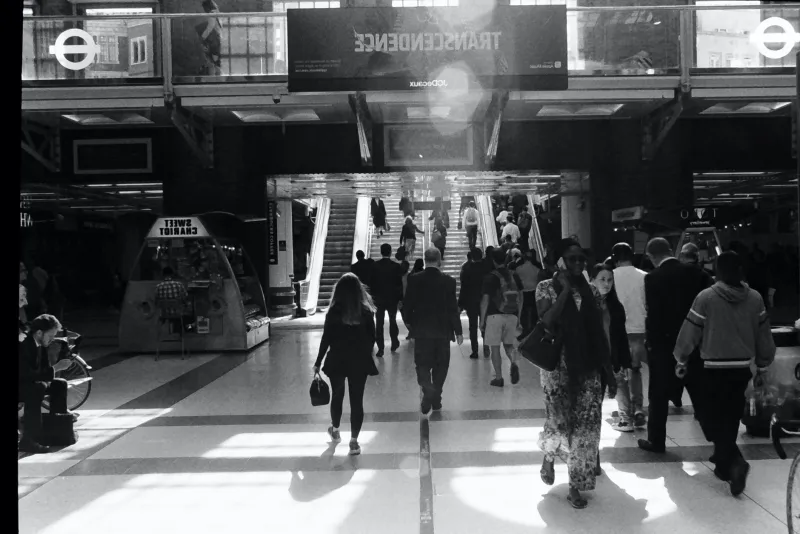
 Photo: Network Rail terminals, via www.conceptdraw.com
 Photo: NHS trusts, via i.ytimg.com
What Makes Concession Real Estate So Appealing
The conventional high street café model is, at its core, a bet on location and passing trade. You sign a lease, absorb the business rates, and hope the footfall projections your agent sold you weren't wildly optimistic. Concession pitches flip that equation. Rather than hunting customers, you're placed directly in their path at the precise moment they want what you're selling.
Consider the dynamics of a mid-sized regional hospital. Staff shifts create predictable demand spikes at 7am, 1pm, and 9pm. Visitors arrive in waves tied to visiting hours. Outpatient clinics generate a steady trickle of anxious people who, research consistently shows, spend more on comfort purchases. The footfall isn't just high — it's structured, predictable, and emotionally primed for a decent coffee and something to eat.
For a café owner tired of sweating over whether a rainy Tuesday will wipe out the week's margin, that kind of predictability has enormous appeal.
Understanding the Revenue-Share Model
Before you get too starry-eyed, it's worth being clear about how concession agreements typically work — because the financial mechanics are quite different from a standard commercial lease.
Most concession operators pay a combination of a fixed pitch fee and a percentage of gross turnover, often ranging from 12% to 25% depending on the venue and the volume of footfall on offer. Some agreements are purely revenue-share with no base rent; others flip this and charge a fixed fee regardless of how much you sell. The distinction matters enormously when you're modelling viability.
Revenue-share models are friendlier during slow periods but can become painful when trading is strong — handing over a fifth of a bumper month's takings stings in a way that a flat lease payment doesn't. Fixed-fee models offer more upside in good trading but expose you to loss if the venue's footfall disappoints. Getting your projections right before you commit is non-negotiable.
Also worth scrutinising: what's included in the pitch fee? Utilities, waste management, and equipment maintenance vary wildly between concession agreements. Some venues provide fitted-out kiosks; others hand you a shell and expect you to invest in a full fit-out before trading a single cup.
The Application Process: More Tender Than Tenancy
Securing a concession isn't like renting a shop. Most opportunities — particularly in NHS trusts, transport hubs, and local authority venues — go through a formal procurement or tender process. That means paperwork, and quite a lot of it.
You'll typically need to demonstrate financial stability, provide evidence of food hygiene standards and accreditations, outline your proposed menu and pricing, and make a case for how your offer serves the venue's specific audience. Public sector tenders will often ask for social value statements — essentially, your pitch for why a local independent represents better community value than a national chain.
This is actually where independents hold a genuine advantage. A well-crafted proposal that emphasises local sourcing, community ties, staff development, and environmental credentials can resonate strongly with procurement panels who are, frankly, a bit bored of rubber-stamping the same chain operators. If your story is compelling and your numbers stack up, you're a more interesting proposition than you might think.
It's also worth knowing that not every concession goes through formal tender. Smaller venues — community hospitals, independent rail operators, business parks — often award pitches through direct negotiation. Networking within your local business community and making speculative approaches to venue managers can open doors that never appear on a public procurement portal.
Brand Visibility: Asset or Compromise?
One tension that independent operators frequently wrestle with is what a concession pitch does to their brand. Operating inside someone else's building, under someone else's signage guidelines, and often within strict menu and pricing constraints can feel like a dilution of everything that makes an independent café distinctive.
That concern is valid, but it's also manageable. The key is to negotiate brand presence clearly upfront. Many venue operators are flexible about allowing concessionaires to use their own branding, provided it meets basic style guidelines. A well-designed kiosk that carries your café's identity — name, colours, story — can actually be a powerful piece of marketing, introducing your brand to thousands of people who might never have found your high street location.
Think of it less as compromise and more as a satellite. Done well, a concession pitch doesn't dilute your brand — it extends it.
Is a Concession Right for Your Next Move?
The honest answer is: it depends on what problem you're trying to solve. If your challenge is unpredictable revenue and you want a more stable trading environment, a well-chosen concession pitch can provide exactly that. If you're looking to scale without the capital commitment of a full second site, a concession — with its lower upfront costs and built-in footfall — can be an elegant solution.
If, however, your café's identity is deeply tied to a particular neighbourhood community, or your model depends on the kind of unhurried, ambient experience that a busy hospital corridor simply can't accommodate, then the concession route may not be the right fit.
The growth opportunities are real. The footfall is genuinely there. But as with any expansion decision, the café owners who thrive in concession environments are the ones who've done the maths honestly, read the contract carefully, and gone in with a clear-eyed understanding of what they're trading in exchange for that enviable, guaranteed queue.